
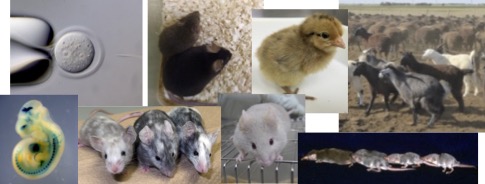
We develop and apply highly efficient genetic engineering technologies in mice using CRISPR/Cas genome editing and the Tol2 transposon system.
Our approaches include gene knockout methods that enable phenotypic analysis directly in founder (F0) animals, such as Triple CRISPR, as well as precise knock-in of desired DNA sequences, conditional genome modification, and large-scale genomic engineering.
We have also developed highly efficient transgenesis methods based on the Tol2 transposon system and applied them to enhancer analysis and visualization of tissue-specific gene expression. This system is also a powerful approach for efficiently expressing genetically encoded biosensors in living animals.
We now use these technologies not simply as tools for genome manipulation, but as an experimental platform for directly testing hypotheses in developmental and evolutionary biology at the whole-animal level.
Animal morphology has undergone remarkable diversification during evolution, whereas many of the genes that control development are surprisingly well conserved among vertebrates. We hypothesize that one of the major driving forces of morphological evolution lies in changes to cis-regulatory elements, particularly enhancers, which determine when, where, and to what extent genes are expressed.
We study developmental enhancers associated with Dlx genes involved in craniofacial and jaw development, as well as Myostatin and Scx, which contribute to the development of muscles, tendons, and the musculoskeletal system. Our goal is to identify these enhancers and understand both their developmental functions and evolutionary history.
Using genome editing, we not only delete enhancers but also relocate them to different genomic loci and artificially create novel combinations of enhancers and target genes. We then examine how such changes alter gene expression and morphology in mice.
Our aim is not simply to reconstruct evolutionary history from existing organisms and genomes. Instead, we experimentally recreate cis-regulatory changes that could have occurred during evolution and test their consequences in vivo. By reconstructing evolutionary processes experimentally,we seek to uncover the principles by which changes in gene regulation generate morphological diversity.
Ultimately, we aim to extend this approach from studies of vertebrate craniofacial and musculoskeletal evolution toward new forms of developmental engineering.
Researchmap https://researchmap.jp/read0199852
ORCID orcid.org/0000-0001-8785-5439
Google Scholar https://scholar.google.com/citations?user=qP9CIeIAAAAJ&hl=ja